When Your Nonprofit Website Becomes One More Thing to Worry About
 Your nonprofit website should help people understand your mission, trust your organization and take the next meaningful step. But when it loads slowly, looks unreliable on mobile or becomes difficult for staff to update, it starts working against the outreach your team is already doing.
For a communications director managing campaigns, donor updates, events, reports and social media, a struggling website rarely feels like one neat problem to solve. It feels like one more fragile system that could fail at the worst possible moment, right before a giving push, volunteer drive or important board update.
Website support for nonprofits is not about adding flashy features or creating more work for your staff. It is about building reliability into a tool your mission depends on, with ongoing maintenance, monitoring, security, performance improvements and practical guidance when something needs attention.
Here are five signs your organization may be ready to move beyond patchwork fixes and put dependable website support in place.
Your Website No Longer Reflects the Organization You Are Today
A nonprofit can grow quickly while its website quietly falls behind. New programs are added, priorities shift and new stories emerge, but the site still reflects an earlier version of the organization. That disconnect can affect how donors, partners and community members understand your work.
The signs may be obvious, such as outdated program pages or an awkward mobile design. They may also show up as comments from leadership, board members or supporters who cannot find the information they expected.
Watch for warning signs such as:
- Important program, impact or staff information is outdated or difficult to update
- Donors or board members have commented that the site looks dated or confusing
- Mobile visitors struggle with navigation, forms or key calls to action
- Your team avoids website edits because the process feels fragile or unpredictable
A dated website does more than create a design problem. It introduces hesitation. A potential supporter should not have to wonder whether your organization is active, responsive or prepared to steward their support well.
Routine Website Updates Feel Like High-Risk Projects
 Publishing an event, updating a campaign landing page or adding a new report should not feel like pulling a loose thread. When minor content changes regularly create unexpected formatting issues, plugin conflicts or broken forms, your staff is working in reactive mode.
This often happens when websites have accumulated years of updates without a consistent maintenance process. Plugins age, themes become more difficult to support and integrations that once worked smoothly begin to fail without warning.
Your team may need backup when:
- Donation, registration or email signup forms fail unexpectedly
- A basic content update requires outside troubleshooting every time
- Website changes are delayed because staff fears breaking something
- Campaign launches include last-minute technical emergencies
When a communications team spends its limited capacity troubleshooting technology, it loses time for messaging, relationship-building and mission-focused work. Reliable website support replaces that uncertainty with a clear process for updates, testing and problem resolution.
Visibility and Engagement Are Declining, but the Cause Is Unclear
Your team may be consistently publishing content and promoting campaigns, yet organic traffic, email signups or completed donation actions remain flat. In many cases, the problem is not a lack of effort. It is a set of website issues that are difficult to see without looking under the hood.
Broken links, slow pages, mobile usability problems, outdated redirects or indexing issues can quietly reduce the value of strong content. Even a compelling impact story cannot create momentum if the page is difficult to find or frustrating to use.
Website support for nonprofits should include enough technical insight to separate content challenges from website health problems. That means checking what is working, identifying barriers on priority pages and helping your team focus on improvements that connect to meaningful action.
Start with the pages that matter most to your mission and outreach:
- Donation and recurring giving pages
- Volunteer, advocacy and newsletter signup pages
- High-priority program pages and resources
- Campaign landing pages and event registration flows
When your team can see which obstacles are limiting supporter action, website decisions become more strategic and easier to explain to leadership.
There Is No Consistent Plan for Maintenance, Backups or Security
Many nonprofits do not have a full-time website or development role, so maintenance tasks naturally compete with more visible work. Security updates, backups and performance monitoring slip to the bottom of the list until a problem makes them urgent.
Unfortunately, a website does not stay healthy just because no one has noticed an issue. Regular updates and monitoring reduce the risk of preventable downtime, outdated functionality and security concerns that can affect both your organization and the people who trust you with their information.
A sustainable website care plan should answer basic questions:
- Who is responsible for updates, backups and security checks?
- How will your organization know when a critical form or page stops working?
- What happens if the site has an issue during an important campaign?
- How are performance and technical issues prioritized over time?
You do not need an internal technology department to answer those questions. You need a dependable partner or process that keeps routine website care from becoming an emergency response plan.
Your Website Makes It Harder to Demonstrate Impact
A nonprofit website is more than an online brochure. It is often where supporters learn what has changed because of your work, where funders review programs and where prospective partners decide whether your organization is aligned with their goals.
When impact reports are difficult to publish, success stories are buried or engagement data is unclear, your website is not giving your team the support it needs. That makes it harder to build confidence with supporters and harder to show leadership how digital outreach contributes to organizational goals.
Your website may be limiting your impact story when:
- New reports, program wins and campaign updates take too long to publish
- Supporters cannot quickly move from a story to a donation or participation opportunity
- Your reporting does not clearly show how people find and use priority pages
- Website improvements are disconnected from outreach or fundraising goals
A well-supported website creates a clearer line between the work your organization does and the actions supporters can take because they understand it. That is not only a technical improvement, it is a trust-building advantage.
What Dependable Website Support for Nonprofits Should Include
The right support relationship should reduce pressure, not add another layer of management for your team. It should be responsive when something goes wrong, but it should also be proactive enough to prevent common problems from becoming urgent.
For most nonprofit organizations, useful ongoing website support includes:
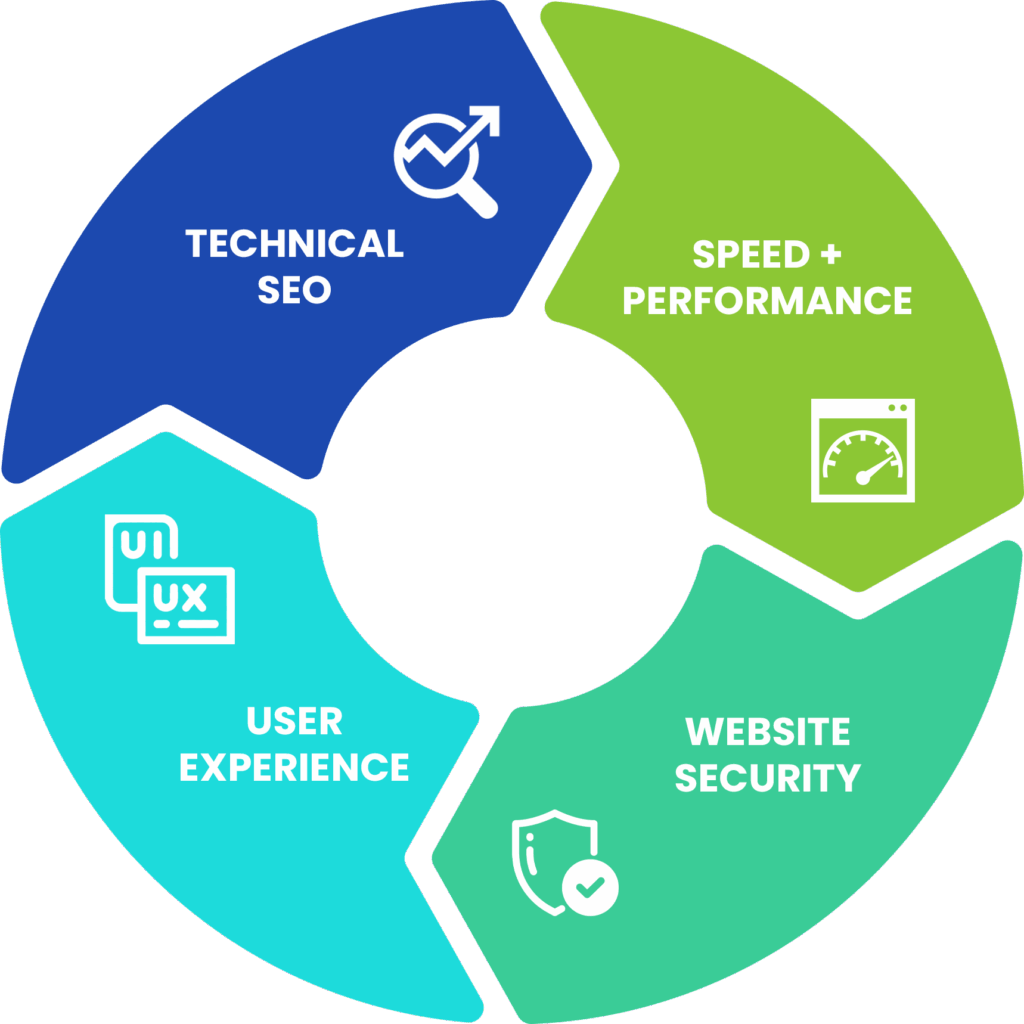
- Regular WordPress, plugin and theme maintenance with appropriate testing
- Reliable website backups and a clear recovery plan
- Security monitoring and attention to vulnerabilities or suspicious activity
- Performance checks on important mobile pages and supporter actions
- Technical SEO reviews for broken links, indexing issues and visibility barriers
- Practical support for content updates, campaigns and changing program needs
At Black Dog Marketing, our website maintenance and hosting support is designed to keep websites secure, monitored and usable over time, while helping purpose-driven teams stay focused on the work only they can do.
Schedule a conversation with Black Dog Marketing to discuss ongoing website support, or start with a Visibility Report to identify the most important opportunities for improvement before your next major outreach campaign.
Move From Patchwork Fixes to a Website You Can Count On
If your site feels unreliable now, waiting for a high-visibility campaign to expose the problem is rarely the best strategy. You don’t need to overhaul everything at once. Start by identifying the issues that create the greatest risk for your supporters and your team.
Review your donation and signup experiences on mobile. Confirm that priority pages are current and easy to reach. Check whether backups, updates and security monitoring are actually happening. Then identify which technical and visibility improvements will make your next campaign more dependable.
Black Dog Marketing helps nonprofits uncover the website issues that are consuming staff time, weakening visibility or creating unnecessary risk. With website support for nonprofits, your team can spend less time worrying about what might break and more time building the relationships that move your mission forward.
When you are ready for a clearer path forward, start with a website review or schedule a conversation about ongoing support for your nonprofit.